
If you live in Rancho Peñasquitos or one of the neighborhoods around 92129 and a simple bend, lift, or twist left you with lower back pain that shoots down your leg, a herniated disc may be the cause — and surgery is rarely the first step. For many local patients, conservative chiropractic care, including spinal decompression therapy, is where real relief starts.
At Advanced Chiropractic and Wellness Center, Nicholas LaHood, D.C. helps patients find the cause of their disc pain — and treat it at the source. Our office is right here in Rancho Peñasquitos at 9932 Mercy Rd, Suite 106, San Diego, CA 92129, and we see patients from across the surrounding ZIP codes: Rancho Bernardo (92128), 4S Ranch and Rancho Bernardo West (92127), Carmel Valley (92130), Mira Mesa (92126), Scripps Ranch (92131), and Poway (92064).
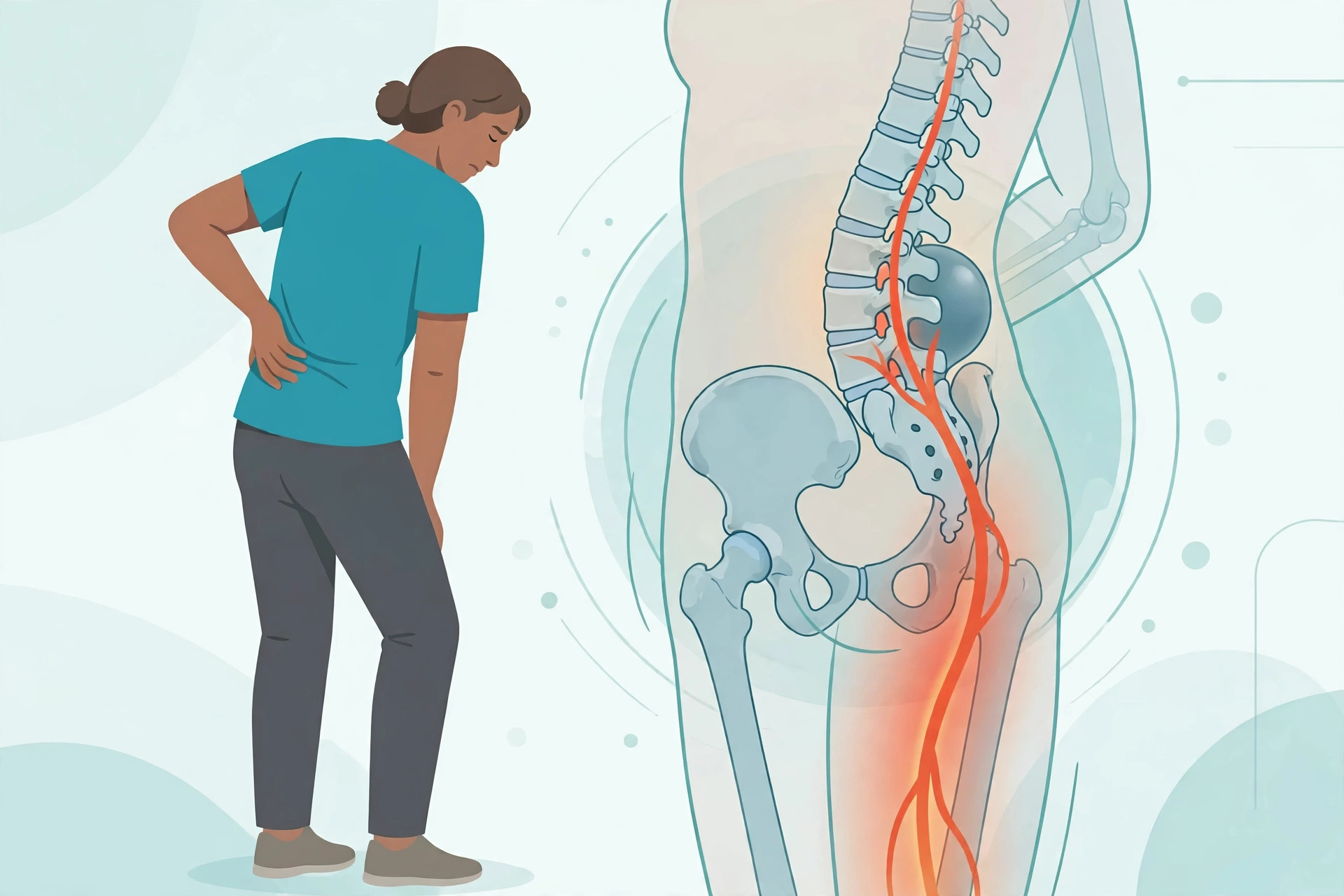
!Herniated disc and lower back pain — a lumbar disc pressing on a nerve, treated with chiropractic care in Rancho Peñasquitos, San Diego 92129
A herniated disc: when the soft center of a spinal disc pushes out and presses on a nearby nerve.
What Is a Herniated Disc?
Your spinal discs sit between the vertebrae in your back, acting as cushions and shock absorbers. Each disc has a tough outer layer and a soft, gel-like center. A herniated disc — sometimes called a slipped or ruptured disc — happens when that soft center pushes out through a tear or weak spot in the outer layer.
A herniated disc only causes pain when the bulging material presses on or irritates a nearby nerve. That is why some disc problems cause only a dull backache, while others cause sharp pain, numbness, or weakness down an arm or leg. Herniated discs most often happen in the lower back, where they can press on the sciatic nerve and cause sciatica.
A bulging disc is related but different: the disc bulges outward without the outer layer tearing. Both can irritate nerves, and both are treated conservatively in most cases.
Herniated Disc Symptoms
Symptoms depend on where the disc is and which nerve it touches. In the lower back, common signs include:
- Lower back pain that may be sharp, aching, or burning
- Pain, numbness, or tingling that travels down one leg — often below the knee
- Weakness in a leg or foot, such as trouble lifting the front of the foot
- Pain that gets worse with sitting, bending, lifting, coughing, or sneezing
- Pain that eases when you change position or lie down
Herniated discs in the neck can cause similar symptoms in an arm or hand. Pain that stays only in the back, without any leg symptoms, is less likely to be a disc pressing on a nerve — which is why an evaluation matters before deciding on treatment.
What Causes a Herniated Disc?
Discs wear down gradually with age, and a herniated disc often follows a small, everyday movement rather than a single dramatic injury. Common contributors include:
- Age-related wear. Discs lose water and flexibility over time, making the outer layer more likely to tear.
- Lifting or twisting the wrong way. Bending and twisting while lifting a heavy box, a child, or gym equipment is a classic trigger.
- Repetitive strain. Desk work, long drives on the I-15 and SR-56, and jobs that involve repeated bending load the lower spine day after day.
- Falls and car accidents. A sudden jolt can damage a disc that was already worn.
- Extra weight and poor core strength. Both add load to the discs in the lower back.
In many cases there is no single moment to blame — the disc was wearing down for years, and one ordinary movement was the last straw.
When Should You See a Doctor for a Herniated Disc?
Most herniated discs improve with conservative care, but some symptoms need prompt medical attention. Seek care right away if you have:
- Loss of bladder or bowel control
- Numbness in the saddle area (inner thighs/buttocks)
- Sudden, severe weakness in a leg or foot (such as foot drop)
- Pain after a fall, car accident, or other trauma
- Pain that keeps getting worse despite rest
If your pain has lasted more than a week or two, keeps coming back, or is interfering with work, sleep, or picking up your kids, it’s time to get it checked — even without the red flags above. The sooner the cause is identified, the sooner treatment can be aimed at the right problem.
How Chiropractic Care Treats a Herniated Disc
Chiropractic treatment for a herniated disc focuses on relieving pressure on the nerve and helping the disc heal — not just masking the pain. At Advanced Chiropractic and Wellness Center, care for disc patients may include:
Spinal decompression therapy. For disc-related pain, spinal decompression gently stretches the spine to create negative pressure inside the disc. This can help draw bulging disc material away from the nerve and bring in the nutrients discs need to heal. It’s non-surgical, drug-free, and many patients find it relaxing.
Chiropractic adjustments. Gentle, precise adjustments restore motion to the joints of the lower spine and pelvis. When the spine moves the way it should, pressure on the nerve root often eases — and so does the leg pain.
Computerized chiropractic care. Instrument-based adjusting delivers consistent, measured treatment — a good option for patients who prefer a gentler approach or don’t like manual “cracking.”
A plan built around the cause. Your first visit includes a consultation and examination so Dr. LaHood can identify whether a disc is actually the source of your pain — and which disc and nerve are involved. Care is then built around that finding — not a one-size-fits-all routine — along with practical guidance on sitting, lifting, stretching, and sleeping positions to keep the pain from coming back.
3 Things You Can Do at Home for Herniated Disc Pain
While you wait for your appointment, these often help:
- Keep moving, gently. Short, frequent walks usually help more than bed rest — the trails at Los Peñasquitos Canyon Preserve and Black Mountain are good for gentle laps. Lying still for days can make stiffness — and pain — worse.
- Use ice first. For a new flare-up, ice on the lower back for 15–20 minutes at a time can calm inflammation around the nerve. (Heat feels good, but ice is usually the better first choice.)
- Lift with your legs, not your back. Bend at the knees, keep the load close to your body, and never twist while lifting. If something is heavy, ask for help — one bad lift is how many disc problems start.
If home care isn’t cutting it after a week or two, that’s your sign to get evaluated.
Herniated Disc Treatment in Rancho Peñasquitos (92129) and the Surrounding ZIP Codes
You don’t have to “just live with” disc pain, and you don’t have to start with surgery or injections. If a herniated disc is keeping you from work, the gym, a hike up Black Mountain, or a good night’s sleep, a conservative evaluation is a smart first step.
We welcome patients from:
- Rancho Peñasquitos — 92129 (including Torrey Highlands, Carmel Mountain, Black Mountain Ranch, and Sabre Springs)
- Rancho Bernardo — 92128
- 4S Ranch / Rancho Bernardo West — 92127
- Carmel Valley — 92130
- Mira Mesa — 92126
- Scripps Ranch — 92131
- Poway — 92064
Advanced Chiropractic and Wellness Center
Nicholas LaHood, D.C.
9932 Mercy Rd, Suite 106, San Diego, CA 92129
Open Monday–Wednesday and Friday, 9:00 AM–6:00 PM
Call (858) 987-8282 to schedule your visit, or learn more at www.lahoodchiro.com.
Frequently Asked Questions About Herniated Discs
Can a herniated disc heal without surgery?
Yes, in most cases. The majority of herniated discs improve with conservative care such as chiropractic treatment and spinal decompression, often over several weeks. Surgery is usually reserved for cases with severe or worsening weakness, or pain that doesn’t improve with conservative care.
Is spinal decompression good for a herniated disc?
When disc pain is driven by a herniated or bulging disc pressing on a nerve, spinal decompression is specifically designed to relieve that pressure — which is why it’s a core part of our disc treatment protocols.
What’s the difference between a herniated disc and sciatica?
A herniated disc is a cause; sciatica is a symptom. When a herniated disc in the lower back presses on the sciatic nerve, the result is sciatica — pain, numbness, or tingling running down the leg.
How long does a herniated disc take to heal?
It varies with the size and location of the herniation and how long it’s been there. Some patients feel meaningful relief within a few visits; disc-related pain often improves over several weeks of consistent care. Your evaluation will give you a clearer timeline.